

Patio Covers Built for Austin, San Antonio & Central Texas Homes
San Antonio & Austin’s Experts in Insulated Patio Covers
Reclaim your backyard from the intense Texas sun with a custom covered patio designed for durability and style. At Texas Patio Covers, we specialize in high-performance shade solutions—including our popular insulated aluminum patio covers—engineered to withstand the unique Central Texas climate. Whether you are in San Antonio, Austin, or the Hill Country, our HOA-approved structures can reduce outdoor temperatures by up to 20 degrees, providing a seamless, low-maintenance extension of your home.
Patio Cover Builders Serving San Antonio, Austin & the Hill Country
San Antonio Patio Covers
Serving Stone Oak, Alamo Ranch, Shavano Park, and Helotes.
Austin Patio Covers
Serving Round Rock, Pflugerville, Cedar Park, and Westlake.
New Braunfels Patio Covers
Custom shade for Gruene, Bulverde, and Spring Branch.
Round Rock Patio Covers
Durable, insulated patio covers built for Central Texas homes.
Cedar Park Patio Covers
Custom shade solutions designed for Cedar Park’s climate.
Buda Patio Covers
Serving the rapidly growing communities south of Austin.
Bulverde Patio Covers
Hill Country shade structures built for durability and comfort.
Call us today!
(830) 357-8960
Get a Free Patio Cover Quote
Contact us any time
We will get back to you as soon as possible.
Please try again later.
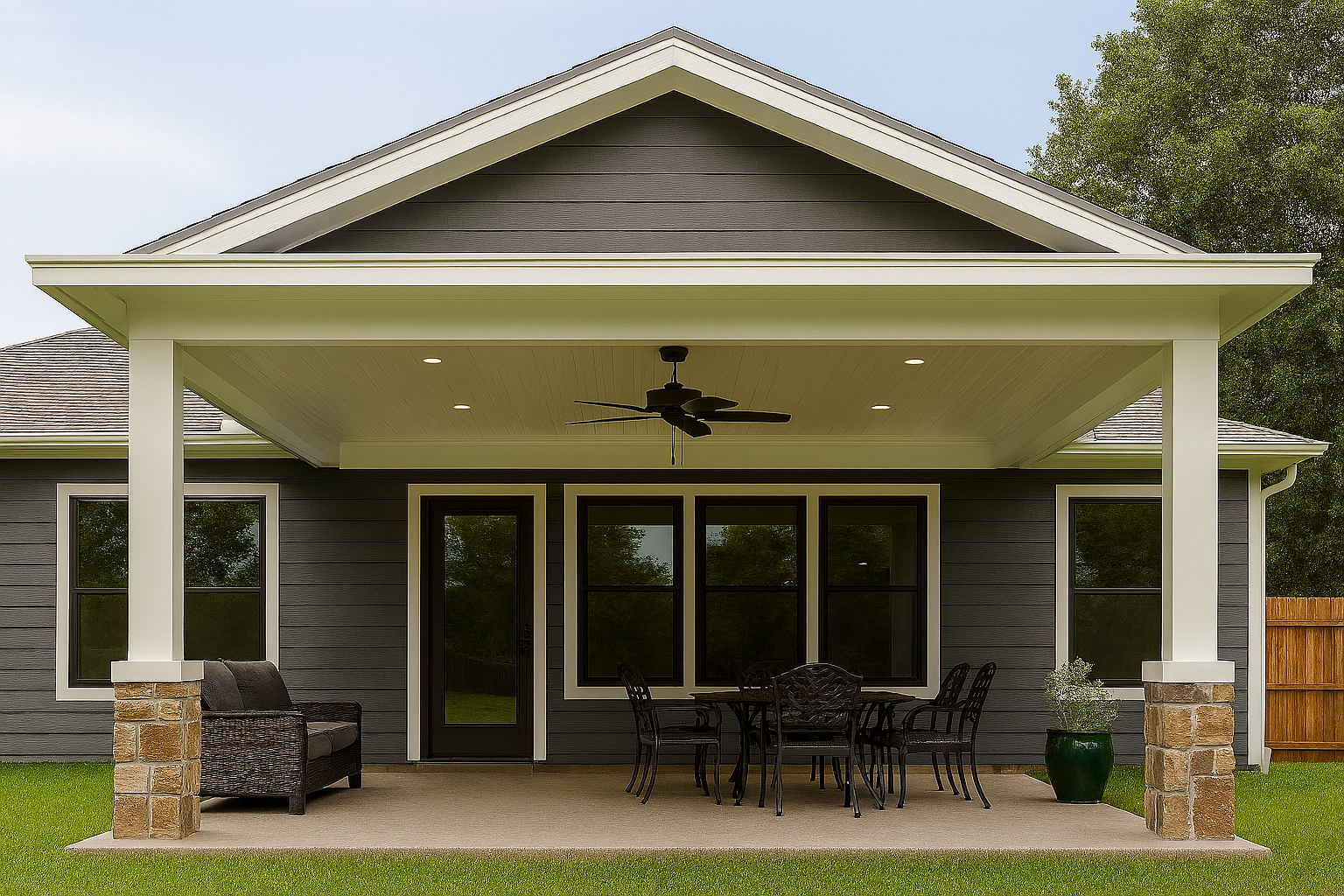
Patio Cover Materials & Design Options
Choosing the right material is the difference between a patio that looks good and one that actually performs in the heat.
Insulated Aluminum Patio Covers
Our #1 recommendation for heat reduction. These insulated aluminum patio covers feature a high‑density foam core that blocks radiant heat and creates a leak‑proof solid ceiling.
Looking for year-round protection from pests? Our structures are designed to be easily converted into a screened-in patio enclosure.
Custom Patio Covers
A classic look with exposed beams, premium wood options, and customizable patio covers offer the best of both worlds.
See our photo gallery for inspiration.
Aluminum V‑Pan Covers
A durable, cost‑effective solution often used for carports or utility shade.
Discuss your custom design with our design team.
Covered Patio vs. Lattice Pergola
Comparison Table
| Feature | Solid Covered Patio | Lattice Pergola |
|---|---|---|
| Rain Protection | 100% Waterproof | Minimal |
| Heat Reduction | High (Up to 20° Cooler) | Moderate |
| Internal Lighting | Integrated LED/Fans | Hanging Lights or Fans Only |
| Maintenance | Very Low | Periodic Staining Required |
If you prefer partial shade and a classic lattice look, explore our custom pergola designs.
Get a free quote today!
(830) 357-8960
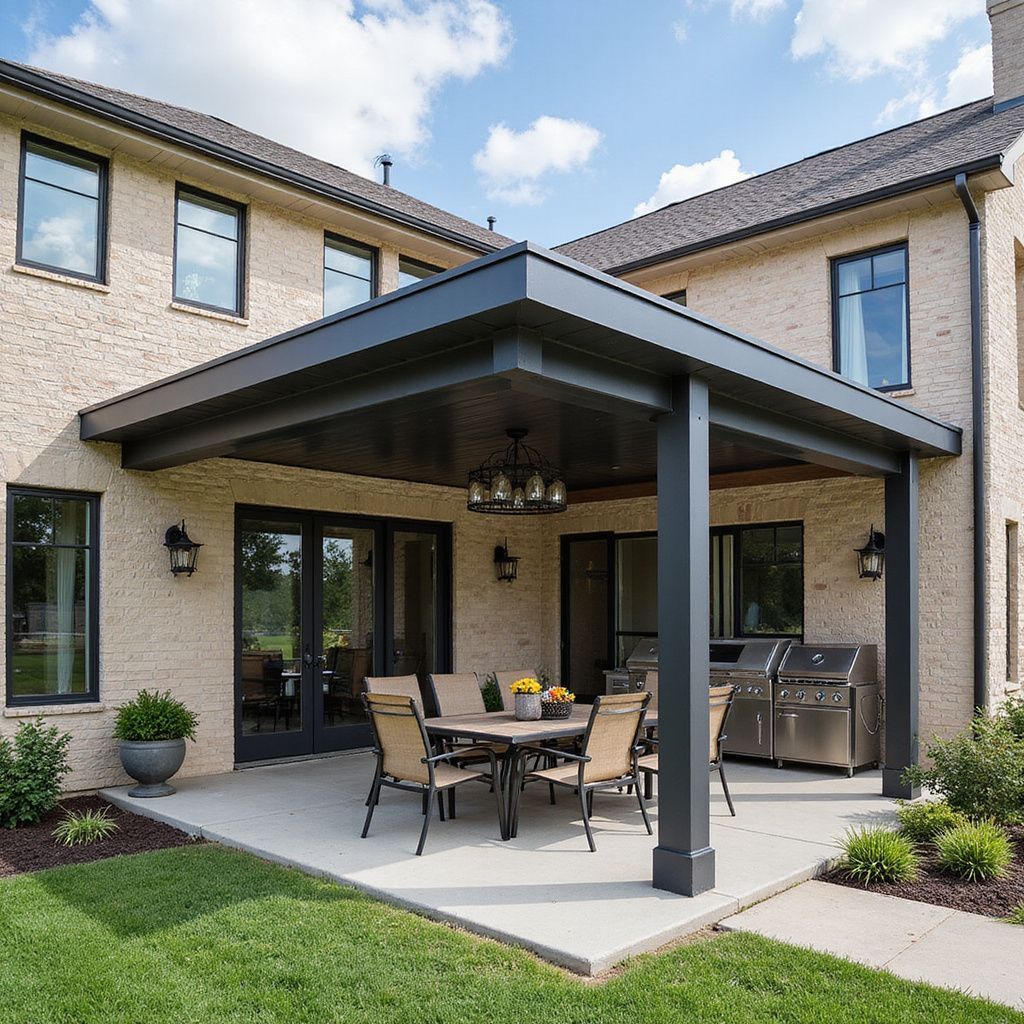
Why Homeowners Choose Our Patio Covers
Engineered for Texas Weather
Heat-Resistant Materials: Our aluminum and insulated panels stay cool and structurally stable in extreme temperatures.
Low Maintenance: Say goodbye to warping, cracking, peeling, or termite damage. Our materials are designed for a lifetime of use.
Customizable Designs: From contemporary flat roofs to traditional gabled styles, we build to suit your home's architecture.
Built to Code: We handle the entire permitting process, ensuring your structure meets all local San Antonio or Austin building requirements.
Frequently asked questions
What is the best material for a patio cover in Texas?
For the Texas heat, insulated aluminum roof panels are the best choice. They block 100% of radiant heat and can keep your patio up to 20 degrees cooler than traditional wood or lattice structures.
Do I need a permit for a patio cover in San Antonio or Austin?
Yes, most municipalities in Central Texas require a building permit for permanent patio covers. Texas Patio Covers handles the entire permitting process for our clients to ensure all structures are built to local code.
How long does it take to install a patio cover?
Most patio covers are installed in 1–3 days depending on size, material, and electrical options. Insulated aluminum covers typically install the fastest with minimal disruption to your yard.
Can a patio cover be attached to any type of home?
Yes. We build patio covers for brick, stucco, Hardie board, and stone homes. Each structure is engineered to match your home’s load-bearing requirements and HOA guidelines.
What upgrades can be added to a patio cover?
Popular upgrades include recessed LED lighting, ceiling fans, electrical outlets, decorative posts, privacy screens, and integrated gutters. Insulated roof panels support the widest range of electrical add-ons.
How much cooler is a covered patio compared to an uncovered one?
A solid insulated patio cover can reduce temperatures by up to 20 degrees by blocking radiant heat and providing full-shade coverage, making outdoor spaces usable even in peak summer months.
Get a Free Estimate
Whether you’re in San Antonio, Austin, or the Hill Country, our team designs patio covers that fit your home, your style, and your budget.
📞 (830) 357-8960
✉️ alex@texaspatiocovers.com
Get a Free Patio Cover Quote
Contact us any time
We will get back to you as soon as possible.
Please try again later.