

Best Outdoor Structure Materials in Austin (2026)
Get a Free Quote
Contact us any time
We will get back to you as soon as possible.
Please try again later.
Outdoor structure materials in Austin should balance heat, UV exposure, humidity, storms, maintenance, appearance, and budget. Composite decking is low-maintenance, cedar offers natural character, pressure-treated lumber is economical, and aluminum performs well in demanding weather. For shade and comfort, insulated aluminum covers, pergolas, Polygal roofing, and screen rooms each serve different needs.
How should Austin homeowners compare outdoor structure materials?
Start with four questions: how much shade do you need, how much maintenance will you accept, what style fits your home, and how long should the structure last? Austin’s intense sun, temperature swings, occasional hail, humidity, and heavy rain make material selection more important than choosing based on appearance alone.
Texas Patio Covers builds patio covers, pergolas, and screen enclosures—not decks—so the decking comparison below is general planning guidance for homeowners evaluating a complete outdoor living project.
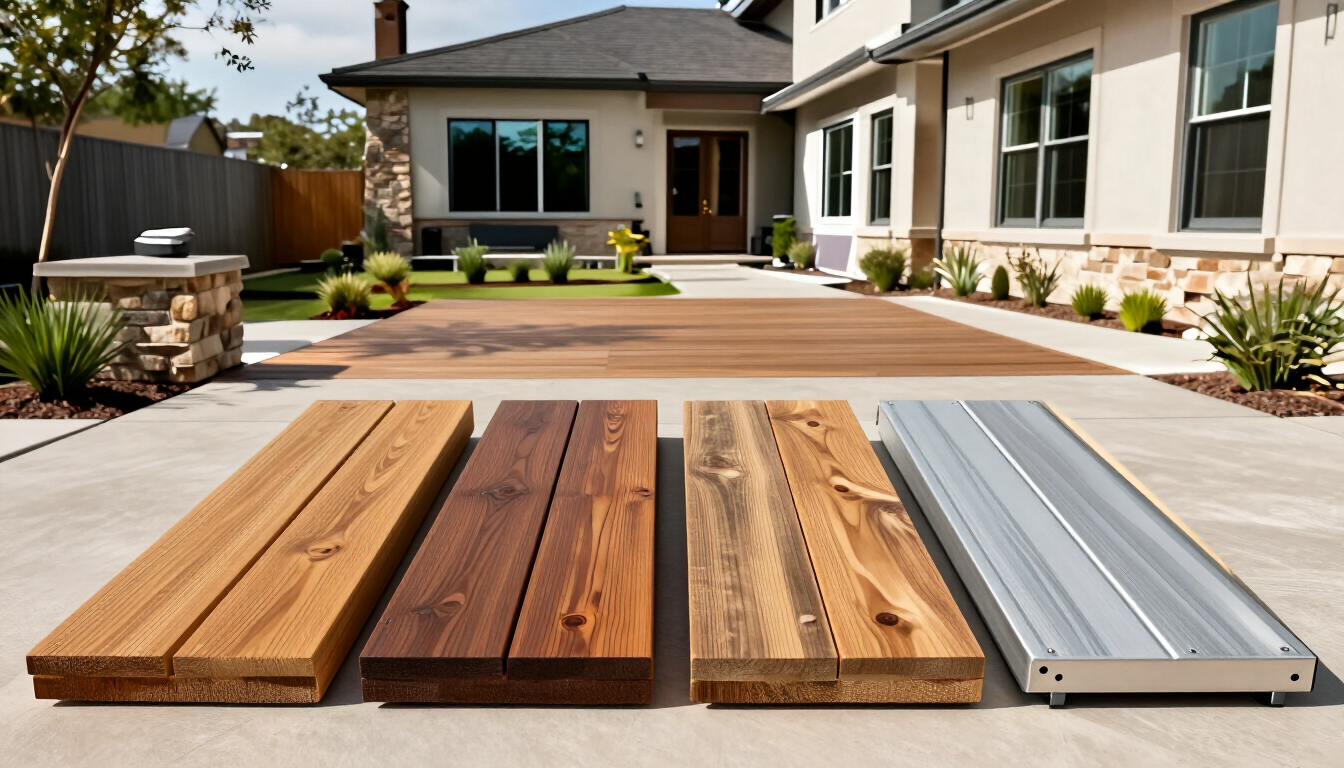
Decking material comparison
Composite decking
Composite decking combines wood fibers and recycled plastics. It resists rot, insects, splintering, and frequent staining better than traditional wood, making it a practical choice for homeowners who want less upkeep.
Best for: low-maintenance entertaining areas and families who want consistent color and texture.
Consider: higher upfront cost, possible heat retention in direct sun, and the need to choose a product with suitable heat and fade performance.
Cedar decking
Cedar provides warm color and natural texture that complements Hill Country architecture. It is lighter than many hardwoods and can look beautiful when properly sealed, but it requires periodic cleaning, inspection, and refinishing.
Best for: homeowners prioritizing natural appearance and willing to maintain the surface.
Consider: fading, moisture-related movement, insects, and ongoing maintenance.
Pressure-treated decking
Pressure-treated lumber is often the most budget-friendly option. It can work well when properly installed and sealed, but boards may warp, crack, or require more maintenance over time than composite materials.
Best for: cost-conscious projects with a realistic maintenance plan.
Consider: regular sealing, fastener corrosion, splinters, and dimensional movement.
Aluminum decking
Aluminum decking is lightweight, rot-proof, insect-resistant, and highly durable. It can be a strong option near pools or in areas exposed to frequent moisture, although it may feel less traditional and cost more initially.
Best for: long-term durability and minimal maintenance.
Consider: sound underfoot, surface temperature, finish options, and installation cost.
Which shade structure material is best for Austin?
The right shade structure depends on whether your priority is complete solar protection, an open architectural accent, filtered light, or insect control.
Insulated aluminum patio covers
Insulated aluminum patio covers use layered panels designed to reduce heat transfer and provide a more comfortable covered area. They can create a reliable outdoor room for dining, grilling, lounging, or placing furniture that would otherwise be exposed to direct sun.
Advantages commonly include:
- Strong protection from sun and rain
- Low maintenance compared with painted wood
- Clean modern lines and multiple finish options
- Compatibility with lighting, fans, and other outdoor-living features
- Long-term durability in Central Texas conditions
Explore Austin patio covers or review the aluminum patio cover options to see how this approach may fit your home.
Aluminum versus cedar pergolas
Aluminum pergolas offer consistent dimensions, resistance to rot and insects, and minimal upkeep. They are a good fit for homeowners who prefer a modern appearance or want durable shade framing without routine staining.
Cedar pergolas provide natural grain, warmth, and a more traditional or rustic look. They may blend especially well with stone, brick, and Hill Country landscaping, but they need sealing and periodic care to preserve their appearance.
Choose aluminum when durability and low maintenance lead the decision. Choose cedar when natural character and design texture matter more than maintenance requirements. See aluminum pergolas and pergola FAQs for additional planning information.
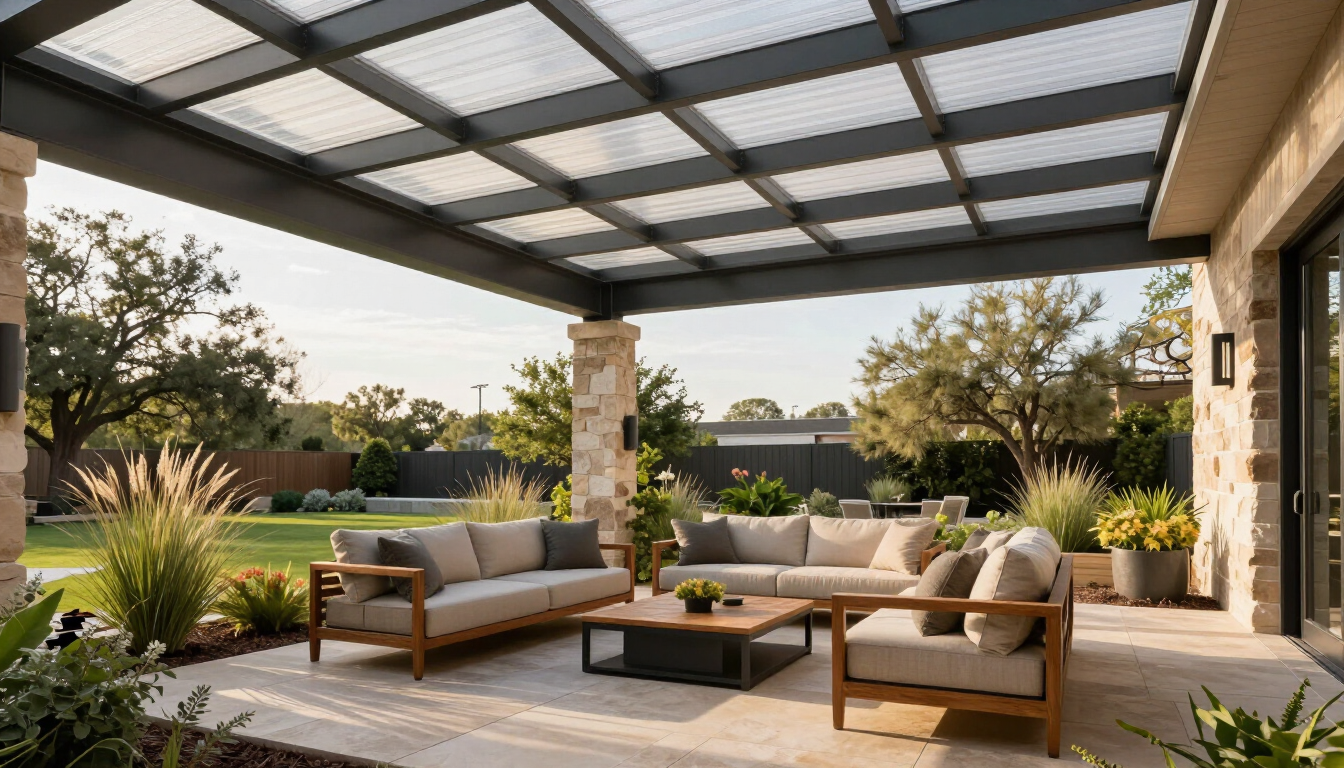
What is Polygal roofing used for?
Polygal is a translucent or multiwall polycarbonate roofing material that allows soft, filtered daylight while providing overhead coverage. It can be useful when you want a brighter outdoor area than a solid roof provides, such as a covered walkway, patio, or pergola-inspired space.
Polygal roofing may be worth considering when you want:
- Daylight without full direct sun
- A lighter, contemporary visual effect
- Weather protection with a partially open feeling
- A roof material that complements a modern outdoor design
Light transmission, privacy, ventilation, color, and heat management should all be discussed during design. Learn more about Polygal roofing .
Are screen rooms worth it in Central Texas?
Screen rooms can extend the usable season of a patio by reducing mosquitoes, flies, and other insects without completely enclosing the space. They are especially useful for homeowners who enjoy outdoor meals or evening gatherings but avoid the yard during peak insect activity.
A screen room will not provide the same thermal performance as a fully conditioned room, but it can improve comfort and help protect furniture from direct exposure. Consider screen mesh, roof style, drainage, access, privacy, and whether you need a solid patio cover above the enclosure.
See screen rooms , screened porches , and the screen room FAQs before scheduling a consultation.
How can you finance an outdoor living structure?
Financing should be evaluated alongside the project design—not after a final price is chosen. The best option depends on your credit profile, available equity, repayment timeline, cash reserves, and comfort with variable or fixed payments.
Common approaches include:
- Contractor-arranged financing: Some contractors offer access to financing partners or application options. Review the complete terms, fees, payment schedule, and approval requirements.
- HELOC or home equity loan: These may use available home equity. Compare variable versus fixed rates, closing costs, repayment terms, and the potential consequences of using home equity.
- Personal loan: An unsecured loan may provide a predictable project budget without using the home as collateral. Compare total repayment cost and monthly payment carefully.
- Cash-out refinance: This replaces an existing mortgage and may provide funds for improvements, but closing costs, loan duration, and current mortgage terms deserve close review.
- Savings or a promotional card: Cash avoids borrowing costs, while a promotional 0% card can be useful only if the balance can be paid before promotional terms end.
A practical way to choose
- Set a complete project budget, including permits, electrical work, drainage, and site preparation.
- Keep an emergency reserve instead of committing every available dollar.
- Compare total cost, not just the monthly payment.
- Confirm whether the structure, installation, and accessories are included.
- Ask how financing affects the project timeline and cancellation terms.
A reputable contractor should explain project pricing clearly and avoid pressuring you into a financing decision. You can begin by reviewing Texas Patio Covers’ services or customer reviews .
Frequently asked questions
What is the lowest-maintenance material for an Austin patio?
Aluminum and composite products generally require less routine maintenance than cedar or pressure-treated wood. The best choice still depends on the specific product, finish, installation quality, and exposure to sun and water.
Is cedar or aluminum better for a pergola?
Aluminum is usually better for low maintenance and consistent durability. Cedar is often better for homeowners who want natural grain and are comfortable with periodic sealing and color maintenance.
Does Texas Patio Covers build decks?
No. Texas Patio Covers provides general decking guidance but specializes in insulated aluminum patio covers, cedar and aluminum pergolas, Polygal roofing, and screened outdoor spaces.
How much does an outdoor structure cost?
Cost varies according to size, materials, roof design, site conditions, permits, electrical features, screening, and finishes. A project-specific estimate is more useful than a broad online average.
Plan your Austin outdoor living project
The best outdoor structure materials in Austin are the ones that match your priorities for shade, maintenance, appearance, durability, and budget. Composite or aluminum can reduce upkeep, cedar can add natural character, insulated aluminum can improve daytime comfort, and screen rooms can make evenings more enjoyable. Compare the full installed project—not just the material price—and review financing terms before committing. If you are planning a patio cover, pergola, Polygal roof, or screen room in Austin or the Hill Country, call Texas Patio Covers at (830) 357-8960 for a free estimate.